Please leave comments, contact directly via email hpoconnell@yahoo.ie or follow on Twitter @henrypoconnell

Saturday, June 27, 2020

June 25th 2020 and 1990 - when your sporting stars align


‘The best laid schemes o’ Mice an’ Men

Gang aft agley,

An’ lea’e us nought but grief an’ pain,

For promis’d joy!’

From 'To a Mouse (On Turning up in her Nest, with the Plough)', November 1785,

by Robert Burns.


'The Lord brings the counsel of the nations to nothing; he frustrates the plans of the peoples'

The Bible, Psalm 33:10


‘Mann Tracht, Un Gott Lacht’

Old Yiddish saying meaning, ‘Man Plans, and God Laughs’. 


You may be wondering at the three separate but related quotations above, but if you read on it will hopefully start to make sense. Back in January of this year and in a rush of extreme sports-fandom related optimism I decided to tempt fate by writing about how 2020 was going to be the year for me. Thanks to my good friends over at www.verywestham.com, who kindly posted that piece, as https://sportyman2020.blogspot.com/ did not yet exist.

After some near and many quite far misses, back in January I thought I was on the verge of seeing my two teams (the Tipperary senior hurlers and Liverpool Football Club) hold their respective national titles at the same time for the first time in three decades. Then along came a pandemic and everything stopped. Individual mouse-like hopes and sporting dreams suddenly seemed trivial and I felt like, just in that Yiddish derived saying above, God was laughing.

Then Jurgen Klopp (with a good claim to be the most God-like of humans) issued an inspiring statement in March on how football (and by extension all sport) is only the ‘most important of the least important things’ (see earlier blog: https://sportyman2020.blogspot.com/2020/03/football-life-and-death.html) and everyone settled down a bit.

Eventually, and thanks in no small part to the motivational intervention of David Brent (see earlier blog: https://sportyman2020.blogspot.com/2020/06/super-soccer-speaker-credited-with.html), Project Restart was successful and the Premier League got going again in the last week. 

And last Thursday night at Stamford Bridge Chelsea beat Manchester City, thus ensuring that Liverpool could not be caught in the race for the Premier League. The result has led to a steadily building outpouring of joy and relief from Liverpool fans all over the world. Adding to the euphoria of victory is the knowledge that Liverpool have played scintillating football all season with, in my opinion, their greatest ever team.  

So here again is my pre-COVID-19 January piece, with a few new images included...


'When your sporting stars align' 

(first published on www.verywestham.com on January 5th 2020)


The start of a new decade and the recent success of my two teams (the Tipperary hurling team and Liverpool FC) has got me thinking that my sporting stars are starting to align perfectly for just the second time in my life, like that brief magical period of a few weeks in the summer of 1990.

For non-Irish readers, hurling is an ancient Irish game that resembles field hockey but is played at a much more frenetic pace, with the players being able to catch and run with the ball. The ‘Premier League’ of hurling is the All-Ireland Senior Hurling Championship, played between 12 different Irish counties. The season runs from May to September with the final being played in Croke Park Dublin in front of 80,000 people. Every boy (and many girls) from hurling counties grows up supporting their county team and dreaming of one day playing for them. Despite being 46 years old and never being a particularly accomplished under-age player, one of my get-to-sleep fantasies is still the one where I score an injury time winning goal for Tipperary in an All-Ireland final with all of my friends, family (and enemies) in the crowd.

Hurling (and its far less elegant companion game of Gaelic Football) has strong historic links with Irish independence and nationalism and, therefore, a certain anti-Englishness. However, most Irish hurling fans are also avid followers of the actual Premier League, and everyone has a team. So while I was born as a supporter of the Tipperary hurling team (being a native of that county) and started going to their games with my father from the age of 6, I became a supporter of Liverpool FC, by my own choice.

In fact, I remember the exact moment when I became a Liverpool supporter. It was 1982, I was nine years old and I had a vague idea that there was this great football team that wore all red and whose fans sang songs. I was in a shop in our village and I picked up a Liverpool FC mug from a shelf. The mug had details of all of Liverpool’s titles and achievements. I was astounded at the number of successes. At the same time, I thought of the strong Irish contingent with the club at that stage: Mark Lawrenson, Jim Beglin, Ronnie Whelan and Ian Rush (who I thought was Irish). And then a wave came over me and I remember saying to myself something along the lines of: ‘these guys are brilliant!’ Thus began my love affair with Liverpool FC.

So anyway, back to the summer of 1990. Tipperary had won the All-Ireland championship in September 1989 and so they were still the reigning champions in the summer of 1990. The 1989 win had been extremely special, being Tipperary’s first championship win since 1971 (and so the first in my lifetime). And Liverpool had just won the First Division title in May 1990. But the absolute peak of sporting-stars-alignment took place specifically on June 25th 1990. I sat (and stood and jumped and screamed) with my father and brother in our sitting room, watching Ireland beat Romania in a penalty shoot-out and progressing to the quarter finals of our first ever World Cup, to take on the hosts Italy in Rome.


Liverpool - First Division Champions for 1989-1990


Tipperary - All-Ireland Senior Hurling Champions for 1989


The Republic of Ireland defeat Romania in the World Cup on June 25th 1990 


Of course I didn’t realise or appreciate just how special those few weeks were until many years later. Just after the Irish victory over Romania, I headed off on that Irish rite of passage to ‘the Gaeltacht’ (Irish language school) in Connemara for the rest of the summer. There I watched the Italy game on June 30th and saw Salvatore ‘Toto’ Schillaci score the only goal as Italy progressed to the semi-final at Ireland’s expense. Two weeks later, on July 15th, I got the news from home that Cork had beaten our beloved Tipperary in the Munster hurling final, thus eliminating us from the All-Ireland hurling championship. And the rest, as they say, is history. Tipperary would go on to win intermittent but too infrequent All-Ireland championships, in 1991, 2001, 2010, 2016 and again last August, making us the current reigning champions. And despite keeping the trophy case ticking over since 1990, Liverpool would never again be champions of England. To add insult to injury, the greatest rivals of Tipperary and Liverpool (the Kilkenny hurlers and Manchester United, respectively) would go on to have unprecedented levels of success in the subsequent three decades. 


Tipperary captain Seamus Callanan with the Liam McCarthy Cup in August 2019 


And the victorious Tipperary team


But of course 2020 looks like Liverpool’s dismal record might finally come to an end. Even the most cautious and pessimistic of Liverpool fans realises that the current lead is a healthy one. So in May 2020, Tipperary will still be the reigning All-Ireland hurling champions, Liverpool will (please God) be champions of England (and Europe, and even the world, if you take that latter competition seriously). So, three decades on from that last sporting zenith in 1990, my sporting stars will again (please God, again) be aligned. As for the Republic of Ireland football team – well I guess you can’t have it all…  


And now for images of two crucial June 25th penalties - taken exactly thirty years apart:


June 25th 1990: David O'Leary of Ireland puts the ball past Silviu Lung of Romania, 

to take Ireland into the 1990 World Cup quarter finals


And finally, a penalty involving two Brazilians in the COVID-19 related emptiness of Stamford Bridge, as Willian of Chelsea scores against Ederson of Manchester City on June 25th 2020, to effectively end the Premier League title chase of 2019-2020, with Liverpool as champions.


Sunday, June 21, 2020

June 21st 1970, and why everyone loves Brazil


Neutrals always support Brazil in football, or at least that’s how it seems to me. Even when Brazil is up against a clear underdog, the neutrals almost always want to see Brazil win, and do a few magical things along the way. And even though Brazil has amassed five World Cup wins, more than any other nation, people still want to see them win more. This in itself is unusual, as neutrals don’t often support the sporting top dogs. As an ultimate litmus test, I would also guess that if your country had to lose a World Cup Final you would probably choose Brazil as your conquerors.


Brazil's World Cup winning teams


1958


1962


1970


1994


2002


Why Brazil?

Applying logic to the phenomenon of Brazilian related infatuation is difficult, but one has to ask the question – why does everyone love Brazil?

Perhaps the support for Brazil is something to do with their long history of beautiful and attacking football. But teams from e.g. Argentina, Holland and Spain have produced beautiful and attacking football over the years, yet they don’t have anything like the neutral support of Brazil.

Or maybe neutrals do just like to support a winning team, but then Germany and Italy have claims to being there or thereabouts with Brazil in terms of World Cup wins (four each) and Germany have appeared in more finals than any other nation. Yet most neutrals have little interest in either Germany or Italy.

And then maybe it’s something to do with the instinctive way in which individual Brazilian players play, traditionally players who were often raised in poverty, learning their trade in street football and able to turn and change games with moments of genius while doing things with the ball that players from most other footballing nationalities wouldn’t even consider doing. But then the same can be said for players from their South American neighbours in e.g. Argentina and Uruguay.

And perhaps the support for Brazil is something to do with the beauty and diversity of the country itself, a place that most people will never visit and can only dream about. Such dreams are based on ludicrously romantic images such as the Christ the Redeemer statue towering over Rio de Janeiro or the deep sun-soaked Amazonian jungle and river, not to mention the Amazonian beauties frequently lingered on by lascivious cameramen when panning over the crowds of fun-loving, high-on-life, samba-dancing Brazilian football supporters.


Christ the Redeemer statue, Rio de Janeiro


Brazilian fans


A philatelic representation of Brazil and its flag


And whatever about the pulling power of their fun-loving fans, you can never underestimate the pulling power of a good football kit and surely Brazil’s kit is among the most iconic in all of world sport, not just football. Incidentally, the kit was designed by then 19 year old writer and illustrator Aldyr Schlee in 1953 and it replaced the previous strip of all white with blue trim that had one of its last and certainly most infamous outings in the last game (and effectively the final) of the 1950 World Cup in the Maracanã Stadium in Rio de Janeiro, where Brazil had a surprise loss to Uruguay. Such was the national heartbreak after the so called Maracanaço (translates as ‘the Agony of Maracanã) that a new more ‘patriotic’ kit was called for, incorporating the colours of the Brazilian flag and Schlee’s winning entry came to be known as the camisa canarinho, with reference to that canary yellow jersey.


World Cup 1986 – the Tipperary boys for Brazil

The first World Cup that I was old enough to really get into was Mexico 1986 and even though Brazil had not won a World Cup since 1970, most of my school friends and I supported them, without question. Along with the reasons for Brazilian fandom already outlined, they had a team of particularly gifted players in 1986, with the usual cool single-word names such as Zico, Josimar and, the coolest of the cool, Socrates.


Socrates - Brazilian midfielder, medical doctor and, possibly, the coolest man who ever lived


And, unconsciously at least, we may have had another very specific reason for our Brazilian fandom that related to our beloved and then chronically underachieving Tipperary hurling team. Brazil’s World Cup success of 1970 (also in Mexico) had come just a year before Tipperary’s last All-Ireland success in 1971, and a few years before any of us had been born. So while our parents and grandparents had almost come to take for granted the dominance of Tipperary hurling in the 1950s and 1960s, we had yet to see an All-Ireland win. And we were reared on tales of hurling legends such as Jimmy Doyle, Donie Nealon, John 'Mackey' McKenna and Babs Keating. But we had never seen Tipperary success and those legends were as distant to us as were the tales of Pelé's three World Cup winning Brazilian teams in 1958, 1962 and 1970. So maybe we were drawn to Brazil because in 1986 they were sleeping giants of the game, just like the Tipperary hurlers, not to mention the colour comparisons between the camiso canarinho kit and Tipperary’s blue and gold.


Tipperary senior hurling captain Seamus Callanan, wearing the camiso Tipperary


1965 All-Ireland hurling final programme - Tipperary would win their 4th final in 5 years


Ultimately, Tipperary would not win their first All-Ireland title in my lifetime until a few years after that 1986 World Cup, in 1989. And Brazil crashed out of the 1986 World Cup after a penalty shootout defeat to France in the quarter final and they would not win their first World Cup in my lifetime until a full eight years later, in 1994. But by then, there was something different about Brazil. They didn’t seem to play with the same flair and nonchalance of the 1986 team (that nonchalance summed up perfectly by the two step penalty technique of Socrates, too cool to take a proper run up to the ball and ultimately costing Brazil in that penalty shootout). So to me there was very little linking the team and style of play that we saw in 1994 in comparison to the very ‘Brazilian’ team of 1986. And that Brazilian team of 1986 was perhaps the last true Brazilian team, because they had a definite connection in terms of style with the 1970 team, who had won the last World Cup to be held in Mexico.


The Panini sticker album for the 1986 World Cup


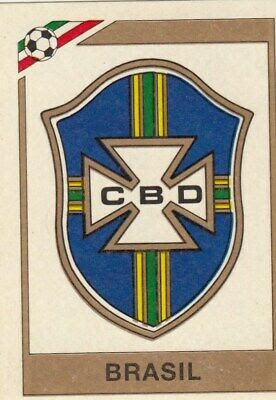
And the highly valuable Panini sticker of the Brazilian crest


Why everyone loves Brazil - the 47 second answer

And after all that earlier theorizing, I will leave you with a 47 second clip that, in my opinion, encapsulates the beauty of Brazilian football and why so many neutral football fans actually support them.

This move has been and continues to be replicated endlessly (and mainly badly) by children and adults on playgrounds, streets, backyards and football pitches all over the world, now a half century since its inception.

The clip shows Brazil’s 4th goal in their 4-1 hammering of Italy in the 1970 World Cup final, in a match played exactly half a century ago today.

There are so many words that can be spoken and written about this brief clip, in terms of the actual football and in terms of the time and place. The world often seems a more innocent, peaceful and happy place when we look at events from a few years before our birth. For example, work had just started on building the ill-fated Twin Towers in New York in 1970 and the moon landing of the previous July was still fresh in everyone's mind. 

And on Friday I spoke to an older friend of mine about the game. Now retired after (according to himself) an exemplary career as one of Ireland's leading Psychiatrists, the excitement in his voice was evident as he recalled watching the 1970 World Cup final as a teenager on television in his parents' home.

Played at altitude and bang in the middle of summer, many of the players look tired in these latter minutes of the game. A few of them have their socks down, something that football health and safety would not now allow. And while every player on the field was a highly talented professional, they seem to play with the spontaneity and abandon of a group of children intent on just having a go.


The move...

Pelé makes an early appearance in the move in the Brazilian half, and then we see the socks-down Clodaldo beating four tired Italians and effectively starting the attack. Then there’s the long and perfect pass from Rivelino down the wing to Jairzinho who takes the ball and almost reluctantly injects some pace to move across the pitch and find Pelé again, who has ghosted forward to the edge of the Italian penalty area. And then there’s Pelé's second contribution, the fulcrum of the whole move. You will note that he takes the ball and touches it four times, the fourth touch being a lazy-looking but telepathically choreographed stroke out to Carlos Alberto and arguably the coolest pass in the history of football. 

And then Pelé walks on slowly, not bothering to do what all young forwards are told to do and look alert for a save or rebound. Instead, he just looks like he knows exactly what’s going to happen. Carlos Alberto connects with Pelé's rolled pass and unleashes a perfectly struck bullet into the net, followed by the ear-splitting crackling of an ecstatic crowd. In all, eight Brazilian players were involved in the move. There was a subsequent pitch invasion at the final whistle and Brazil, having won the World Cup for the third time, was given to Jules Rimet World Cup to keep forever.


Carlos Alberto gets the Jules Rimet Trophy for Brazil, for keeps


And finally, the clip...


Such is its mesmeric quality, I doubt you will be able to watch this clip just once, and I suspect you will hit the repeat button more than a few times, because this is peak Brazil - and it’s why I love them.

Enjoy.

https://www.youtube.com/watch?v=M5HbmeNKino


Saturday, June 20, 2020

Safety - the third part of the Kevin Lally MMA trilogy


Kevin Lally finishes up his wonderful MMA trilogy of blogs today with a quite 'sciencey' look at safety issues in MMA and comparisons to other sports. Here are the links to his first two MMA blogs:

Blog 1: https://sportyman2020.blogspot.com/2020/06/mixed-martial-arts-origins.html

Blog 2: https://sportyman2020.blogspot.com/2020/06/mma-in-ireland-tale-of-tragedy-and.html

And you can follow the polymathic Dr. Lally on Twitter @kevinly

So many thanks again Kevin and it's over to you...


MMA Safety

Deaths in MMA are rare and are less numerous than boxing deaths. While there are a much larger range of techniques used in MMA (punches, kicks, grappling techniques etc.) the number of significant head strikes landed during a bout per minute is less than that of professional boxing. However, boxing has two very different codes, professional and amateur. While the essential rules are the same, glove size, number of rounds and the threshold to end the fight due to trauma differ.

While the rule-set in Professional MMA has finally been agreed (https://www.ufc.com/unified-rules-mixed-martial-arts) what exactly constitutes amateur and what is professional or semi-professional is unclear. Is it merely the presence of payment? The expectations from the audience? Based on experience of the competitors? Bernard Dunne, an Irish former WBA Super Bantam weight champion reports he had over 100 amateur boxing bouts before his pro-boxing debut. It would be a struggle to find a professional MMA fighter with more than 10 amateur bouts. I could not find the amateur MMA record for either Charlie Ward or Joao Carvalho, the two fighters involved in the tragic circumstances resulting in Joao’s death but Joao had only been competing in the sport professionally for a year. 

Most Dangerous Sports?

It is difficult to track the exact incidence of death during sport. Some organisations only report deaths that occurring during a formal competition rather than in training or informal competition. This opinion piece in the BMJ alludes to some global death rates: (https://www.bmj.com/content/352/bmj.i389.full)

·         horseracing (128/100,000 participants a year),

·         parachuting (126)

·         mountaineering (51)

·         professional boxing (7.6)

·         motorcycle racing (7)

·         amateur boxing (1.39)

Unfortunately, MMA is not included here and how exactly the rates are calculated are not described. However, when it comes to mortality rates, we can see that high velocity and high impact sports are inherently the most dangerous. Horse racing, motorsport and downhill skiing are all associated with deadly injuries.

BASE (building, antenna, span, earth) jumping is an extreme sport which involves a person jumping from a height and gliding with aid of a parachute to the ground. There were 9 fatal injuries in a 10 year period from one particular jumping site in Norway (reported here https://pubmed.ncbi.nlm.nih.gov/17495709/)


Between Jan 1, 2000 and May 31, 2010 there were 42 confirmed deaths internationally  during Marathon competition running from myocardial infarction.

There have been 16 confirmed deaths resulting from MMA bouts since 2001 to now (a longer period). However, we must take into account there have been at least 2 million marathon runners in the period study so the proportion of deaths is much lower. The reference is Wikipedia https://en.wikipedia.org/wiki/Fatalities_in_mixed_martial_arts_contests. You could also look at it from the perspective of injury per unit time experiencing the sport, so a Marathon can go on for hours while an MMA fight might be over in 6 seconds.

Taking other injury into account, the relative risks of combat sports rise in comparison to other sports.


The incidence of injury is high in combat sports. However, it is worth distinguishing between significant head injury e.g. concussion and superficial or minor injuries like sprained toes.


From ‘The Epidemiology of Injuries in Mixed Martial Arts, A Systematic Review and Meta-analysis we can see that injuries in MMA are focused more on head and neck zones of the body with concussion accounting for many injuries.

Role of Intent

A frequent rebuttal to the above is that unlike boxing and MMA, the purpose of horseracing or marathon running is not to harm your competitor. This is a legitimate consideration that while other sports have much higher death rates there is no intent to harm. While the intent in combat sports is purely sporting the acts of hitting your opponent are intentional and deliberate.

Non-traumatic injuries

For sake of completion it is worth mentioning that some of the harms associated with MMA and boxing are secondary to weight-cutting practices. Weight cutting is distinct from focused weight loss. In focused weight loss an athlete may go through a strict diet and rigorous training regime to lose body and increase muscle mass over a period of weeks to months. Think Rocky Balboa and his raw eggs and brutal training montage. Weight cutting on the other hand is the sudden drop of water weight by rapid dehydration. Over a period of 2-72 hours an athlete will manipulate their body water content to drop their body weight to meet an entry criterion. They achieve this by many different methods including wearing sweat suits, using saunas and taking salt-baths. Wrestling, MMA, boxing and horse racing are common sports with strict weight classes. Once the weigh-in has been made the athletes do their best to replenish water and energy stores. Acute kidney injury and rhabdomyolysis (severe muscle breakdown) have been reported. There is a suggestion that weight cutting leads to a decrease in brain volume and an increase in brain injury following sporting contest however there is a confounder of dehydration leading to reduced cognitive performance skewing the results. https://pubmed.ncbi.nlm.nih.gov/17495709/

Regulation

We can safely acknowledge that MMA is not to everyone’s tastes. In a similar fashion, golf would not be to everyone’s taste but there are less calls for banning and prohibition. However, the risk associated with MMA, while comparable with professional boxing are substantial. From the point of view of individual autonomy, you must argue that competitors once adequately informed of the risk are entitled to participate. What’s left then for society to decide? Regulation?

While everyone agrees that sports like MMA must be made as safe as possible there is huge disagreement on exactly what changes must be made and which governing body will be empowered to regulate. The history of martial arts is rampant with corruption and stories of demise at the expense of bureaucracy. The absence of a robust evidence base for MMA safety is problematic. In the absence of this evidence base, most MMA organisations continue to draw from the experience of boxing to draft changes for MMA legislation.

A clearer distinction between amateur and professional MMA is desirable. Shorter fights, lower thresholds to stop for injury, protective equipment and fair match making will likely help. There will always be a place for prize fighting, but high stakes events must come with proportional rewards. A sensible national governing body that works under the auspices of Sport Ireland ran in democratic fashion will likely expedite improvements. The reality is MMA has become mainstream and attempts at prohibition will likely be counterproductive from a harm-reduction standpoint.

Regulation in Ireland

In many ways Ireland is ahead of the curve. The Irish Amateur Pankration Association was relabelled as the Irish MMA association with their own website http://mmaireland.ie/. Their stated goal is “to achieve National Governing Body status and recognition of MMA as a legitimate sport, suitable for all ages and levels of ability.”

They are affiliated with the international Federation of MMA  https://immaf.org/ with a view to regulating “elite amateur MMA”.

Safe MMA (https://safemma.org/about/ )is a medical charity  “set up for the public benefit of protecting the health and safety of mixed martial arts competitors in the UK & Ireland”. They have many recommendations and stipulations for competitors listed on their website, including regular MRI brain scans for professional fighters and once-off MRA brain scans to check for structural abnormalities.

Ultimately the sport of MMA is here to stay in both the context of a sporting hobby for amateurs and a potential career for professionals. Regulation will be required at all levels that is backed up by evidence-based sensible health and safety systems.


Tuesday, June 16, 2020

'Super soccer speaker' credited with delivering tomorrow's Premier League restart


The long awaited COVID-19 inflicted shutdown on Premier League football comes to an end tomorrow evening, with 'Project Restart' finally coming to fruition and two ‘behind closed doors’ matches scheduled (Manchester City versus Arsenal and Aston Villa versus Sheffield United). Recent months have seen intense negotiations involving the Premier League, the Football Association and individual football clubs, guided by the evolving advice from public healthcare experts and the financial and footballing imperatives of finishing the 2019-2020 season. Players and managers have had varying views and opinions and the debate has at times become heated and personalized:  https://www.rte.ie/sport/soccer/2020/0527/1143057-troy-deeney-opens-up-on-abuse-over-covid-19-stance/

As always, Jurgen Klopp has provided leadership and a sense of perspective - see earlier blog:  https://sportyman2020.blogspot.com/2020/03/football-life-and-death.html


Jurgen Klopp - who celebrates his birthday today, Bloomsday, and whose words are often as lyrical and insightful as those of James Joyce himself


The date for the return to football has been pushed back a few times and there have been tense and detailed discussions regarding COVID testing and other safety measures for players, management and officials. Training systems employed by clubs in recent weeks have been under constant scrutiny and, when the games return, fans have been urged not to congregate near football grounds https://www.goal.com/en-ie/news/liverpool-hit-back-at-city-mayor-over-claims-fans-would/jfdug46o2yau1a1cvf0as8r3x

Every now and then, little snippets of these negotiations became public, tantalizing football fans with promises of football coming back (apart perhaps from the fans and officials of relegation threatened clubs, some of whom may have preferred the entire season to be declared null and void: https://www.skysports.com/football/news/11669/11957402/premier-league-season-should-be-declared-null-and-void-if-its-not-finished-says-west-hams-karren-brady). 

The return of the German Bundesliga a few weeks back gave everyone a lift (see also earlier blog: https://sportyman2020.blogspot.com/2020/05/physics-football-and-bundesliga.htmland La Liga in Spain has since followed suit.   


Project Restart's secret 'motivational-negotiator'

However, the investigative team at Sportyman2020 have learned that a late breakthrough in Premier League negotiations in recent weeks was in fact facilitated by a ‘motivational intervention’ from a salesman and former office manager. Some clever clogs from the Premier League brought in this individual at a late stage in the discussions and reports from different club attendees have confirmed that his intervention was key in pushing things over the line.

After just a few minutes of listening to his ‘wise, heady/cerebral and urbane/urban mixture of philosophy and leadership lingo and logic’ (apparently this phrase is printed on his business cards), the delegates quickly started to see common ground. A senior Premier League official told delegates that the ‘super soccer speaker’ (his own description of himself) would ‘intensively motivate and brain-energize’ them (again, his own phrase) until they reached an agreement. This prospect was enough to focus the minds of everyone present, and people were apparently putting their hands up to sign agreements within ten minutes of his arrival.

One club official, who wished to remain anonymous, said ''This kinda odd little guy came in and started talking complete and utter bull. He was giving us motivational quotes, doing funny dances and using all kinds of management-speak rubbish like asking us to 'fly some ideas up the flagpole'. He even had a football with him and started trying to do some tricks, but he looked like he was no better at football than at public speaking. Someone from another club suggested he 'put that flagpole where the sun don't shine' and we all suddenly started laughing. I think we started to realize that, unless we could come to some sort of agreement soon, that we would be trapped with this guy for the night''.

Sportyman2020 has since learned that the name of this mystery motivational philosopher is, apparently, David Brent.

And while we don’t have any footage or images from the crucial Premier League breakthrough meeting that he 'facilitated', I have been given a video of Brent delivering a similar intervention to business people some years back and I have the link copied below:

https://www.youtube.com/watch?v=mXytRC0k-K8


Brent doing a reflective photo-shoot after delivering a motivational session


Sunday, June 14, 2020

MMA in Ireland - a tale of tragedy and triumph


This is part two of Kevin Lally's trilogy of blog posts on MMA. Last week, Kevin provided a historical overview of the origins and development of MMA:

https://sportyman2020.blogspot.com/2020/06/mixed-martial-arts-origins.html

In this week's blog, Kevin looks at MMA in Ireland.


In the early and mid-90s the UFC was developing its professional brand in the USA. They had PPV deals with cable operators in the USA but no formal relationship overseas. The events were recorded and released on VHS video tape. Again, this was an era before DVD and broadband internet. Bootlegged videos made their way to the UK and Ireland.

Martial arts were common in Ireland since the 1960s. Perhaps, popular due to the success of martial arts movies like Enter the Dragon (1973) starring Bruce Lee or even the Karate Kid (1984) there wasn’t a town in Ireland during the 1990s that didn’t have a Karate, Judo, Taekwondo or Kung fu class. Of course, boxing was ubiquitous which has a special relationship with Ireland.

It was from these martial arts groups that most people made their first foray into MMA. People who had trained in one martial art or another looked at the UFC and began to ask themselves interesting questions – e.g.  How would my training prepare me to compete in these types of events? Thus small training groups sprouted up around the country and informal competitions took place.

There was no agreed upon rules (at this point the two biggest competitions – Pride and the UFC fought under similar but distinct rule sets). There was no national or international governing body and no specific requirements for health and safety beyond public indemnity. In the United States the UFC was relying on being regulated by the state athletic commissions who regulated professional boxing bouts. To this day there is no recognised governing body for the sport (e.g. an equivalent of FIFA for soccer).

The Last of the Old School

In the early 2000s there had been MMA style bouts placed on Kickboxing cards around Ireland, North and South, East and West. The first “professional” style MMA only tournaments took place in 2004. The Ultimate Fighting Revolution catered for the market in Northern Ireland and the Ring of Truth and later Cage of Truth took place in Dublin. Events were well attended and hosted in hotels, boxing clubs and occasionally GAA clubs. Tickets were the equivalent of 15-25 euro a pop and there might be 11-15 fights on the night. They were a mixture of “amateur” and “professional” rule sets catering for the variety of experience involved. Attendances were in the hundreds from 300-500 on average with most tickets bought by family and friends of those competing.

You can see some clips of the first Ring of Truth here https://www.youtube.com/watch?v=vCanrohaJqc

On March 12, 2005 Rings: Bushido Ireland took place in the Point Depot in Dublin (currently the 3 Arena). Rings was a Japanese MMA organisation that was attempting to bring events to Europe. The event was well publicized with tickets selling healthily probably in excess of 5,000. There was backlash on radio talk shows but the event took place without much fanfare. There were 4 Irish competitors on the card and Mick Leonard was successful in his contest.

The event had been pitched as a blood sport and for many this was their first experience of live MMA. The fights were criticised by some first time attendees as “boring” and not the slug fest they had expected. Unlike the local events it was attended by people unfamiliar with the fighters competing. The event failed to build on the momentum created by smaller local shows and probably didn’t bring a new audience to the fledgling sport in Ireland.

The next big event was Cage Rage Contenders: The Real Deal which took place on May 26, 2007 at The Point in Dublin. The UK based Cage Rage was the biggest professional MMA organisation in Europe and had been running big events in Dublin. The card was stacked with Irish or Irish based fighters and is generally seen as a success.

Later that year the UFC came to The Odyssey Arena in Belfast (UFC 72). Two Northern Irish fighters Colin Robinson and Stevie Lynch competed on the card. Unfortunately, neither were victorious but both are fondly remembered by the Irish MMA community and are the last of the old-school to compete (although Neil Seery, a veteran of Irish MMA made his UFC debut later).  The first UFC on the island of Ireland had a live audience of 8,000 people with millions more watching on television.

The Golden Era

The first UFC in Dublin was UFC 93 held in January 2009. There was one Irish fighter on the card, Tom Egan, friend of Conor McGregor. Tom is often cited as one of the first people to urge Conor to have a go at MMA and join a club. While Tom was unlucky to face a rising star in the form of John Hathaway and lost in the first round, he represented the first of the “golden era” of Irish MMA.

Conor McGregor made his UFC debut in April 2013 (UFC on Fuel TV: Mousasi vs. Latifi). Conor had a series of dominating performances in the smaller leagues in Europe. He debuted  in the aforementioned Ring of Truth in 2007 (video https://www.youtube.com/watch?v=UOSts7PTDxM) going on to win the Cage Warriors championship. He headlined the UFC event in Dublin on July 2014 (UFC Fight Night: McGregor vs. Brandão) which is cited by many as the most successful night in Irish MMA. There were 4 Irish fighters on the card including McGregor as well as Northern Irish Norman Parke. Gunnar Nelson, from Iceland but based for training in Dublin also competed. All were victorious and this group really announced the presence of the Golden era of Irish MMA.

Aisling Daly was the first (and currently only) Irish female fighter to compete in the UFC. She equally should be acknowledged as a pioneer of the sport, representing Ireland around the globe (Denmark, the UK, the USA, Canada and of course Ireland). She also participated in the MMA themed reality TV show the Ultimate Fighter season 20. She was eliminated from the reality TV based tournament at the semi-finals but later went on to compete in the UFC proper. 

This generation of fighters had mostly begun their training in MMA rather than in another martial art (with exceptions). They had coaches who had competed in MMA and this generation was reaping the benefit of the time their predecessors spent watching bootlegged UFC videos in garden sheds practicing MMA moves.

The McGregor Era

Amongst this Golden generation there was an undisputed star in the form of Conor McGregor. McGregor would go on to break multiple records in MMA in terms of attendances and PPV sales but also win championships at two weight classes. He competed in one of the most watched professional boxing bouts of recent times versus Floyd Mayweather and went on to become a global megastar. His stock is still rising despite some falls along the way, both professional and personal.

Tragedy as well as Triumph

On April 11 2016 Portuguese MMA fighter Joao Carvalho died in hospital from an acute subdural haemorrhage. Two days earlier he had competed in an MMA contest in Dublin on the Total Extreme Fighting Championship card. He had two previous MMA bouts in which he had won and lost the other. His opponent on that fateful night was Charlie Ward who also had a modest pedigree (1 win 1 loss). Charlie would later go on to fight in the UFC and perhaps more infamously be involved in Conor McGregor’s assault of a UFC bus.


The Coroner’s court returned a verdict of death by misadventure. The court heard that there were safety concerns about the event made by Prof Dan Healy, chair of SAFE-MMA an organisation that aims to promote safety at MMA events. There were three doctors “ringside” and a paramedic crew on side. The referee had stopped the fight in the third round. Video evidence had showed Joao Carvalho had sustained 41 head strikes during the bout. There were no immediate signs of major injury following the end of the bout but soon after Joao had come nauseous and eventually collapsed. He would die from the injuries sustained during the bout. The coroner’s court recommend a national governing body be put in place for MMA and in the interim MMA follow boxing standards.

The third and final blog post on this series will address some of the safety issues in combat sports like MMA.