Please leave comments, contact directly via email hpoconnell@yahoo.ie or follow on Twitter @henrypoconnell

Saturday, December 5, 2020

Triumphs on the field, tragedies on the terraces: Liverpool FC in the 1980s


During the course of the 1980s, Liverpool FC won 7 First Division titles, including three in a row (1979-1980, 1981-1982, 1982-1983, 1983-1984, 1985-1986, 1987-1988, 1988-1990), two FA Cups (1985-1986 and 1988-1989), 4 consecutive League Cups (1981-1984 inclusive) and two European Cups (1981 and 1984). As you might expect, this remains the most successful decade for any English club in the history of the game. But the tragedies of Heysel and Hillsborough meant that it was also a dark decade for Liverpool and the wider footballing world.

Vital to Liverpool's success was the seamless managerial succession process in the 1980s, with Bob Paisley retiring after nine years as the most decorated manager in the history of the club and handing over to Joe Fagan in 1983, thus maintaining that Boot Room tradition. In 1985, Liverpool went outside of the Boot Room, but not far, and appointed Kenny Dalglish as player-manager.


Kenny Dalglish (born 1951) was already a Celtic legend when he signed for Liverpool in 1977, and he would go on to become the greatest player in the history of Liverpool FC. He played up until 1990, having taken over as player-manager from 1985. During his time as player, he scored 172 goals for Liverpool and probably (in the days before 'assists' were routinely recorded) made as many more goals. 

Citing physical and emotional exhaustion partly related to the Hillborough Stadium disaster in 1989, he resigned as Liverpool manager in 1991. He would go on to manage Blackburn Rovers to a Premier League win in 1993-1994, thus joining Tom Watson (see earlier blog: https://sportyman2020.blogspot.com/2020/08/liverpool-fc-second-decade-1900-1910.html), Herbert Chapman and Brian Clough in an exclusive group of managers to have managed more than one English club to top flight success. Dalglish returned to Liverpool as manager for a brief spell in 2011-2012 and has held various other roles with the club, such as club ambassador and youth coaching roles. In recognition of his long service to the club, the Centenary Stand at Anfield was renamed the Kenny Dalglish Stand in 2017. 


Dalglish in the Anfield Boot Room with Ronnie Moran and Bob Paisley


Along with the managerial stability, Liverpool signed new players from a position of strength, thus always keeping one step ahead of domestic and European rivals. Looking at the list of signings during the 1980s is like looking at a list of the all-time greats in the history of Liverpool FC and the English game.

Bob Paisley’s 1980s signings included Ian Rush, Bruce Grobellar, Craig Johnston, Mark Lawrenson and Jim Beglin.


Welsh international Ian Rush (born 1961) played for Liverpool from 1980 to 1996, with a brief spell at Juventus. The most deadly and instinctive goalscorer of his time, Rush had a particularly potent relationship with Kenny Dalglish. He remains Liverpool's all-time top scorer (346 goals) and he has scored more FA Cup goals (36) than anyone in the history of the game. 


Bob Paisley's managerial successor Joe Fagan then signed players such as Gary Gillespie, Michael Robinson, John Wark, Paul Walsh and Jan Molby.


Danish international Jan Molby played 292 times for Liverpool between 1984 and 1996 - a powerful midfielder with immense vision 


As player-manager, Kenny Dalglish then added Steve Staunton and Steve McMahon and a quartet of players all signed in 1987 who would be integral to a new great Liverpool team in the second half of the 1980s: John Aldridge, John Barnes, Peter Beardsley and Ray Houghton.

From an Irish perspective, Ronnie Whelan would become in 1988-1989 the first Irishman to captain Liverpool and Irish international John Aldridge would have two seasons (1987-1988 and 1988-1989) as Liverpool’s top scorer, the first Irish international to be season top scorer since Steve Heighway in 1974-1975.


That wonderful 1987 quartet of signings, left to right: Peter Beardsley, John Barnes, John Aldridge and (behind) Ray Houghton


Dubliner Ronnie Whelan (born 1961) played 493 times for Liverpool from 1981 to 1994. A gifted midfielder with a habit of scoring spectacular long range goals, he would become the first Irishman to captain the club. 


Liverpudlian and Irish international John Aldridge made the very most of his two and a half years at Liverpool, scoring 63 times in 104 appearances as striker for his boyhood club.


Who put the ball in the English net? Liverpool's Scottish born 

Irish international Ray Houghton, in 1988 


There were some more near misses too, just as in the 1960s and 1970s. While Liverpool became in 1985-1986 only the third team in the 20th century to win the league and FA Cup double, they missed out on two other 1980s doubles by the narrowest of margins, going down to a shock 1-0 defeat to Wimbledon in the 1988 FA Cup final and, of course, losing the 1988-1989 league title by that last minute Michael Thomas goal for Arsenal at Anfield (see earlier blog: https://sportyman2020.blogspot.com/2020/05/aston-villa-5-liverpool-0-1899-and-2019.html )


Anfield, May 26th 1989 and that Michael Thomas goal...


For me, the high point of Liverpool perfection was when Kenny ‘Roy of the Rovers’ Dalglish player-managed Liverpool to that 1985-1986 league and FA Cup double in his first season in charge, scoring the winner against Chelsea in the vital last league game of the season. May 10th 1986 and that FA Cup final win over Everton remains my happiest day as a Liverpool fan, and it’s something I wrote about on May 10th of this year, see earlier blog: https://sportyman2020.blogspot.com/2020/05/may-10th-1986.html


Player-manager Kenny Dalglish seals the 1985-1986 First Division title with his winner at Stamford Bridge against Chelsea.


And then, victory over Everton in the 1986 FA Cup final for the double.


I was a little too young to realise, however, that the absolute peak in Liverpool’s fortunes actually came two years before that FA Cup final, when they defeated Roma in Rome to win the European Cup. That win capped off a near perfect season when Liverpool had also won the league and League Cup.


That starting 11 on the night of the European Cup Final, May 30th 1984 - arguably (at least until recent years) the greatest ever Liverpool team. 

Standing left to right are Bruce Grobellar, Alan Kennedy, Kenny Dalglish, Mark Lawrenson, Alan Hansen and Ian Rush. Front row left to right are Phil Neal, Sammy Lee, Graeme Souness, Craig Johnston and Ronnie Whelan. The game would end in a 1-1 draw and Liverpool won the ensuing penalty shootout 4-2. 


Nerves of steel and legs of jelly - Bruce Grobellar did a shaky legs routine in the penalty shootout to put the Roma penalty takers off their game - and he succeeded.


Before Heysel and Hillsborough, and at the peak of English and European football - was May 30th 1984 the high point for Liverpool FC?


In the dictionary definition of 'midfield general' there should be a picture of Graeme Souness. Aggressive, tenacious, ambitious and superbly skillful, he was a pivotal player for Liverpool from 1978 through to that night in Rome in 1984, his last game with the club. He would of course return as manager in 1991 but his attempts to reverse Liverpool's by then flagging fortunes sadly ended in failure.


Looking back at that 1984 peak now is like looking at an age of lost innocence as it was followed by a seismic shock a year later, with the Heysel Stadium disaster on the night of the 1985 European Cup final between Liverpool and Juventus. This was the first game that I remember watching as a consciously Liverpool fan and, at the time, the implications of the tragedy in the stand meant little to me. In the eerie and largely meaningless match that followed the deaths of thirty nine fans, Liverpool missed out on collecting the European Cup for a 5th time and it would be two decades before they got that fifth title.

Aside from the immense human cost of the Heysel disaster, the footballing cost for Liverpool and other English clubs would also be significant. All English clubs were banned from European competition until the 1990-1991 season, with Liverpool getting a further year of being banned.


Heysel Stadium, Brussels, May 29th 1985


Four years after Heysel came another disaster, and one that has left an even darker shadow on Liverpool FC. In the build-up to the 1989 FA Cup semi-final, 96 Liverpool fans lost their lives because of a number of issues, including sub-standard stadium facilities, overcrowding and police incompetence. The tragedy was compounded by subsequent false allegations about the behaviour of Liverpool fans on the day and a number of cover-ups by senior policing officials.


Hillsborough Stadium, Sheffield, April 15th 1989
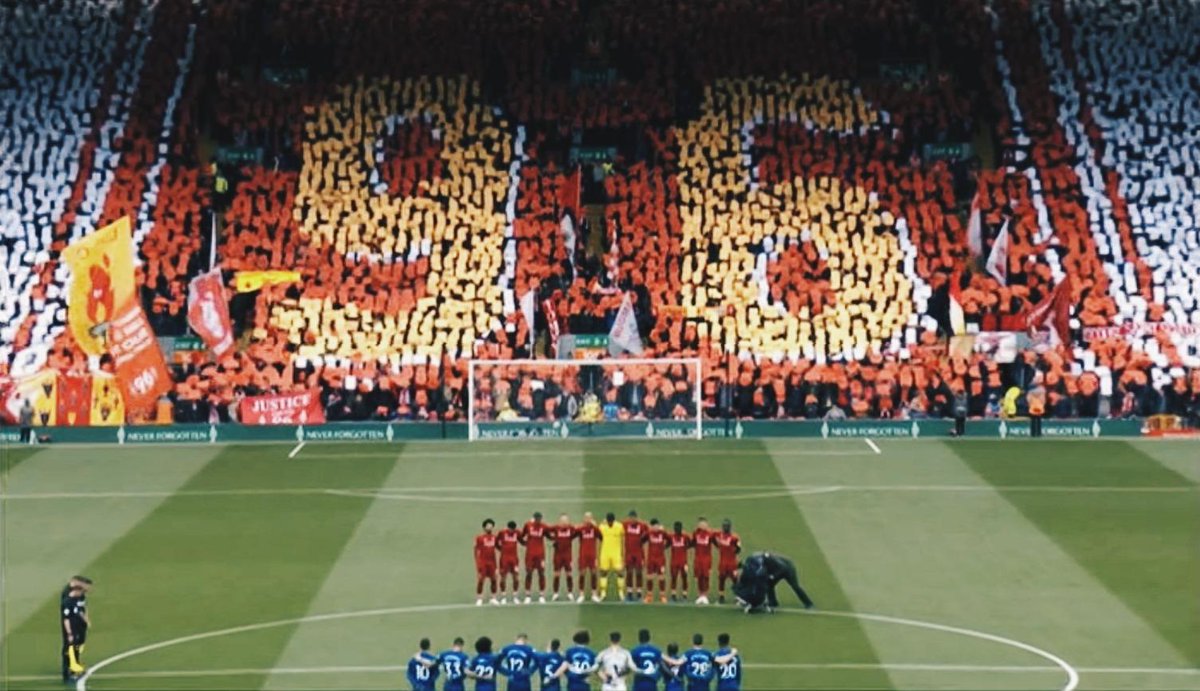


Remembering Hillsborough 


Liverpool FC in the 1980s – the decade in summary


1980-1981

Manager: Bob Paisley

Captain: Phil Thompson

Top Scorer: Terry McDermott (22)

League: 5th in Division One (Winners: Aston Villa, for the 7th time)

FA Cup: 4th round (Winners: Tottenham Hotspur, for the 6th time)

League Cup: Winners for the first time

Europe: Winners for the 3rd time


1981-1982

Manager: Bob Paisley

Captain: Phil Thompson

Top Scorer: Ian Rush (30)

League: winners of Division One for the 13th time

FA Cup: 5th round (Winners: Tottenham Hotspur, for the 7th time)

League Cup: winners for the 2nd time

Europe: Quarter-final (Winners: Aston Villa, for the first time)


1982-1983

Manager: Bob Paisley

Captain: Graeme Souness

Top Scorer: Ian Rush (31)

League: winners of Division One for the 14th time

FA Cup: 5th round (Winners: Manchester United, for the 5th time)

League Cup: winners for the 3rd time

Europe: Quarter Finalists in European Cup (Winners: Hamburg, for the first time)


1983-1984

Manager: Joe Fagan

Captain: Graeme Souness

Top Scorer: Ian Rush (47)

League: winners of Division One for the 15th time

FA Cup: 4th round (Winners: Everton, for the 4th time)

League Cup: winners for the 4th time

Europe: European Cup winners for the 4th time


1984-1985

Manager: Joe Fagan

Captain: Phil Neal

Top Scorer: John Wark (27)

League: 2nd in Division One (winners: Everton, for the 8th time)

FA Cup: semi-final (winners: Manchester United, for the 6th time)

League Cup: 3rd round (winners: Norwich City, for the 2nd time)

Europe: runners-up in European Cup (winners: Juventus, for the first time)


1985-1986

Manager: Kenny Dalglish

Captain: Alan Hansen

Top Scorer: Ian Rush (33)

League: winners for the 16th time

FA Cup: winners for the 3rd time

League Cup: semi-final (winners: Oxford United, for the first time)

Europe: disqualified


1986-1987

Manager: Kenny Dalglish

Captain: Alan Hansen

Top Scorer: Ian Rush (40)

League: 2nd in Division One (winners: Everton, for the 9th time)

FA Cup: 3rd round (winners: Coventry City, for the first time)

League Cup: runners-up (winners: Arsenal, for the first time)

Europe: disqualified


1987-1988

Manager: Kenny Dalglish

Captain: Alan Hansen

Top Scorer: John Aldridge (29)

League: winners of Division One for the 17th time

FA Cup: runners-up (winners: Wimbledon, for the first time)

League Cup: 3rd round (winners: Luton Town, for the first time)

Europe: disqualified


1988-1989

Manager: Kenny Dalglish

Captain: Ronnie Whelan

Top Scorer: John Aldridge (31)

League: 2nd in Division One (winners: Arsenal, for the 9th time)

FA Cup: winners for the 4th time

League Cup: 4th round (winners: Nottingham Forest, for the 3rd time)

Europe: disqualified


1989-1990

Manager: Kenny Dalglish

Captain: Alan Hansen

Top Scorer: John Barnes (28)

League: winners for the 18th time

FA Cup: semi-final (winners: Manchester United, for the 7th time)

League Cup: 3rd round (winners: Nottingham Forest, for the 4th time

Europe: disqualified


Friday, December 4, 2020

Glorious football for a grim decade: Liverpool FC in the 1970s


Bill Shankly and Bob Paisley - Paisley reluctantly took over as Liverpool manager in 1974 after Shankly's shock retirement


For the first 1960s instalment of my history of Liverpool FC I did some ‘helicoptering’ above and beyond footballing issues, such was the eventful nature of that decade https://sportyman2020.blogspot.com/2020/11/liverpool-fc-in-1960s-part-1-of-3.html. 

The 1970s, however, never seems to have much of a pull to it, no matter what way you look at it. So this time I’m going to focus more on the task at hand, the fortunes of Liverpool FC. The 1970s remains the second most successful decade in the history of the club and, such was the range of stars and haul of silverware won that I can only sketch a brief outline here. 

As outlined in a previous blogs, Bill Shankly brought a potent mix of vision, charisma, energy and ruthlessness to his role as Liverpool manager from the day he signed in December 1959. This involved getting rid of a huge amount of dead wood in the playing staff (24 players were gone within a year or so of his arrival), the acquisition of new key players (most notably Ian St. John and Ron Yeats in the construction of his first team), the shaking up and modernising of training and team tactics and the cultivation of a powerful and mutually beneficial relationship with the supporters.

Shankly hit the ground running at Anfield and, after lifting the sleeping giants out of an eight season slumber in the Second Division, his team enjoyed a stunning three season spell between 1963 and 1966 when they won two Division One championships, with the club’s maiden FA Cup victory sandwiched in between.

The second half of the 1960s was less successful, although Liverpool had some near misses, such as a controversial European Cup semi-final loss to Inter Milan in 1965, a Cup Winners’ Cup final loss to Borussia Dortmund in 1966 and a second place finish in Division One in 1968-1969.

Shankly then had the bravery and vision to take apart the ageing 1960s team and build a new team for a new decade. Out went iconic players such as Roger Hunt, Ian St. John, Ron Yeats and Peter Thompson and Shankly then brought in a whole string of new future club legends such as Alec Lindsay, Steve Heighway, John Toshack, Kevin Keegan, Peter Cormack, Jimmy Case and, on the very day that Shankly announced his own retirement (July 12th 1974), Ray Kennedy. There were also some ‘cross-over’ players between the 1960s and 1970s, most notably Tommy Smith and Ian Callaghan.


Steve Heighway (born 1947) who played with Liverpool from 1970 to 1981 and who ended the 1974-1975 season as top scorer, the first Irishman to do so in the history of the club


In one of the most successful attacking partnerships in the history of the game, John Toshack and Kevin Keegan terrorized defences for most of the 1970s, scoring 196 goals between them, many of them as combined efforts - the words 'Keegan', 'Toshack' and 'goal' were frequently combined in football commentary during the decade.


Scouser Ian Callaghan racked up a record 857 games for Liverpool during a stellar career from 1960 to 1978, during which time he won everything worth winning, on the domestic, European and international fronts


'Tommy Smith wasn't born, he was quarried' - so said Bill Shankly of 'Anfield Iron' Tommy Smith, the Scouser who captained Liverpool from the back and, like Ian Callaghan, won everything in his time with Liverpool, from 1963 to 1978. Tommy developed dementia in latter years and sadly passed away in 2019.  


Emlyn Hughes (1947-2004) played 665 times for Liverpool between 1967 and 1979, captaining the team for six seasons in the 1970s and becoming in 1977 the first Liverpool captain to lift the European Cup. Always full of energy and enthusiasm, he earned the nickname 'Crazy Horse' from the Kop early on in his Liverpool career. In this picture he is being followed on to the pitch by recently deceased goalkeeping legend Ray Clemence. 


The new 1970s generation brought more silverware for Liverpool: a record equalling 8th league title in 1972-1973, Liverpool’s first European win (the 1972-1973 UEFA Cup) and a second FA Cup in 1973-1974.

Shankly’s retirement was in the style of the great man - decisive and devastating in its consequences. I have added a video clip below to demonstrate the impact Shankly’s retirement had on the club and the city. 


Press conference to announce the shock retirement in 1974 of Bill Shankly


The video clip below gives an insight into the wider impact of Shankly's retirement - the reaction of the boy at 2:10 is especially poignant:

https://www.youtube.com/watch?v=x08iDQvU0YI


It’s said that Shankly immediately regretted his decision to retire and even considered returning, but it was not to be. And he was destined to have a restless retirement, such had been his complete devotion to his role as the leader of Liverpool FC. This level of devotion is captured in a survey he completed for a schoolchild who posed a series of questions to him regarding the life of a football manager. In answer to the question ‘How many hours a week do you put into your job as a manager?’, Shankly’s response was ‘Every minute of every day’. This statement must also, however, be viewed in the context that Shankly saw his involvement with Liverpool FC as a privilege and a joy and, perhaps, a heavenly alternative to life as a coal-miner that was the fate of many of his contemporaries from his native Glenbuck in Ayrshire, Scotland. 


Liverpool in the 1970s – the Paisley part

Among the many countless acts of service to his club, and the many brave changes and innovations he brought, Bill Shankly had the wisdom and foresight to leave one Anfield institution intact. The legendary ‘Boot Room’ was nothing more than a large cupboard underneath the main stand at Anfield but the conversations and strategizing that occurred there between a handful of visionaries had impacts on football fields hundreds of miles away. 


Some of the key men from Liverpool's Boot Room, left to right: Bill Shankly, Bob Paisley, Ronnie Moran, Joe Fagan and Reuben Bennett


And an image from the actual Boot Room. Pictured left to right are Ronnie Moran, Roy Evans, Bob Paisley, Tom Saunders, John Bennison and Joe Fagan


Shankly’s successor came from the Boot Room and he could not have been more different in character. Quiet, introverted and softly spoken, Bob Paisley was initially reluctant to fill the large boots vacated by the little Scot. But during Paisley’s tenure, covering the second half of the 1970s and up to the end of the 1983 season he would not only fill Shankly’s boots, but he would go on to become the most decorated manager in the long and glorious history of the club. In all he led Liverpool to 6 First Division titles, 3 League Cups, a UEFA Cup, UEFA Super Cup and an astounding three European Cups.

During the second half of the 1970s alone, Paisley’s signings reads like a Liverpool FC Hall of Fame: Phil Neal, Terry McDermott, David Johnson, Alan Hansen, Graeme Souness, Alan Kennedy and, on a free transfer from Home Farm in Dublin, Ronnie Whelan. 

Above and beyond even that stellar list of Paisley acquisitions, however, was another signing who would become the greatest player in the history of the club. On August 10th 1977, for a then club record fee of 400,000 pounds, Liverpool acquired the services of a 26 year old Scot who had already achieved legendary status with Celtic. His name was Kenny Dalglish. 


Along with the 14 major trophies he won with Liverpool as manager from 1974-1983, Bob Paisley (1919-1996) also won that first post-war Division One title with Liverpool in 1946-1947 (see earlier blog: https://sportyman2020.blogspot.com/2020/10/liverpool-fc-1940s.html )


The Kop never forgets its heroes...


They just can't stop winning - Liverpool in 1976-1977...


Left to right. Back row: Joey Jones, John Toshack, David Fairclough, Ray Clemence, Phil Thompson, Phil Neal;

Centre: Joe Fagan (Coach), Alec Lindsay, Jimmy Case, Ray Kennedy, David Johnson, Roy Evans (Second Trainer), Ronnie Moran (Chief Trainer);

Front: Steve Heighway, Ian Callaghan, Tommy Smith, Bob Paisley (Manager), Emlyn Hughes, Kevin Keegan, Terry McDermott


1977: Champions of Europe for the first time...


And 1978 makes it two...


Liverpool FC in the 1970s: a decade in summary

1970-1971

Manager: Bill Shankly

Captain: Tommy Smith

Top scorer: Alun Evans (15)

League: 5th in Division One (winners: Arsenal, for a record 8th time)

FA Cup: Runners-up (winners: Arsenal, for the 4th time)

League Cup: 3rd round (winners: Tottenham Hotspur, for the first time)

Europe: Inter-Cities Fairs Cup semi-final (winners: Leeds United, for the second time)

European Cup winners: Ajax, for the first time

Cup Winners’ Cup Winners: Chelsea for the first time


1971-1972

Manager: Bill Shankly

Captain: Tommy Smith

Top scorer: John Toshack (13)

League: 3rd in Division One (winners: Derby County, for the first time)

FA Cup: 4th round (winners: Leeds United, for the first time)

League Cup: 4th round (winners: Stoke City, for the first time)

Europe: Cup Winners’ Cup: 2nd round

European Cup winners: Ajax, for the second time

UEFA Cup Winners: Tottenham Hostpur for the first time

Cup Winners’ Cup Winners: Rangers for the first time


1972-1973

Manager: Bill Shankly

Captain: Tommy Smith

Top scorer: Kevin Keegan (22)

League: Winners (for a record equalling 8th time)

FA Cup: 4th round (winners: Sunderland, for the second time)

League Cup: 5th round (winners: Tottenham Hotspur, for the second time)

Europe: UEFA Cup: winners

European Cup winners: Ajax, for the third time

UEFA Cup: Liverpool winners, for the first time

Cup Winners’ Cup Winners: AC Milan for the second time


1973-1974

Manager: Bill Shankly

Captain: Emlyn Hughes

Top scorer: Kevin Keegan (19)

League: 2nd in Division One (winners: Leeds United, for the second time)

FA Cup: Winners for the second time

League Cup: 5th round (winners: Wolverhampton Wanderers, for the first time)

Europe: European Cup: 2nd round

European Cup winners: Bayern Munich, for the first time

UEFA Cup Winners: Feyenoord for the first time

Cup Winners’ Cup Winners: FC Magdeburg for the first time


1974-1975

Manager: Bob Paisley

Captain: Emlyn Hughes

Top scorer: Steve Heighway (13)

League: 2nd in Division One (winners: Derby County for the second time)

FA Cup: 4th round (winners: West Ham United for the second time)

League Cup: 4th round (winners: Aston Villa for the second time)

Europe: Cup Winners’ Cup 2nd round

European Cup winners: Bayern Munich, for the second time

UEFA Cup Winners: Borussia Monchengladbach for the first time

Cup Winners’ Cup Winners: Dynamo Kyiv for the first time


1975-1976

Manager: Bob Paisley

Captain: Emlyn Hughes

Top scorer: John Toshack (23)

League: Division One winners for a record 9th time

FA Cup: 4th round (winners: Southampton for the first time)

League Cup: 3rd round (winners: Manchester City for the second time)

Europe: UEFA Cup winners for the second time

European Cup winners: Bayern Munich, for the third time

Cup Winners’ Cup Winners: Anderlecht for the first time


1976-1977

Manager: Bob Paisley

Captain: Emlyn Hughes

Top scorer: Kevin Keegan (20)

League: winners of Division One for a record 10th time

FA Cup: Runners up (winners: Manchester United)

League Cup: 2nd round (winners: Aston Villa, for the third time)

Europe: Liverpool European Cup winners for the first time

UEFA Cup Winners: Juventus for the first time

Cup Winners’ Cup Winners: Hamburger SV for the first time


1977-1978

Manager: Bob Paisley

Captain: Emlyn Hughes

Top scorer: Kenny Dalglish (31)

League: 2nd in Division One (winners: Nottingham Forest for the first time)

FA Cup: 3rd round (winners: Ipswich Town for the first time)

League Cup: Runners up (winners: Nottingham Forest for the first time)

Europe: Liverpool European Cup winners for the second time

UEFA Cup Winners: PSV Eindhoven for the first time

Cup Winners’ Cup Winners: Anderlecht for the second time


1978-1979

Manager: Bob Paisley

Captain: Emlyn Hughes/Kenny Dalglish

Top scorer: Kenny Dalglish (25)

League: winners of Division One for a record 11th time

FA Cup: semi-final (winners: Arsenal for the 5th time)

League Cup: 2nd round (winners: Nottongham Forest for the second time)

Europe: 1st round in European Cup

European Cup winners: Nottingham Forest, for the first time

UEFA Cup Winners: Borussia Monchengladbach for the second time

Cup Winners’ Cup Winners: Barcelona, their first win


1979-1980

Manager: Bob Paisley

Captain: Phil Thompson

Top scorer: David Johnson (28)

League: Division One winners for a record 12th time

FA Cup: semi-final (winners: West Ham United for the third time)

League Cup: semi-final (winners: Wolverhampton Wanderers for the second time)

Europe: 1st round in European Cup

European Cup winners: Nottingham Forest, for the second time

UEFA Cup Winners: Eintracht Frankfurt for the first time

Cup Winners’ Cup Winners: Valencia, their first win


Sunday, November 29, 2020

Kipchoge


The twelve months from October 2019 to October of this year have been strange and eventful for Eliud Kipchoge, and not just because of a certain global pandemic.

However you view his two key running performances that bookended the past twelve months, Kipchoge remains by far and away the most successful marathon runner of all time. He needs no introduction to anyone who has any interest in running. But despite the explosion in the popularity of running among the general public in recent years, the elite stars at the top of the sport get minimal attention in comparison to stars from other sports. So Kipchoge needs some introduction, despite the fact that his achievements are, in my opinion, far more impressive than those of any other elite sports star, ever.


Eliud Kipchoge 


Born in Kenya in 1985, Kipchoge first made his name as a cross-country and middle distance track runner in the early 2000s. He won gold in the Junior Cross Country World Championship in 2003 before going on to win gold again at 5,000m on the track in the World Championships of that year, and silver in the same event two years later.

But in 2012 he moved up distance to the marathon and it’s there that he’s been making history ever since. In ten World Marathon Majors since 2013 (the ‘majors’ include the city marathons of Tokyo, London, Paris, Chicago, New York and Boston) Kipchoge has won eight and lost only his very first and his most recent, in London on October 4th of this year. In the Marathon Majors Series competitions (where athletes are awarded points based on their performance in each of the majors for a year) he has won an unprecedented four consecutive titles, from 2015 through to 2019.

Oh and he’s also the world record holder for the marathon, running the 42.2 km in a time of 2 hours, 1 minute and 39 seconds at the Berlin marathon of 2018. That equates to a pace of approximately 4 and a half minutes per mile. Most reasonably fit people would not be able to maintain that pace for more than a few hundred metres, let alone for a full 26.2 miles or 42.2 km. And Kipchoge’s world record also reflects the dramatic progress that has been made in the marathon over the past century with the winning time at the London 1908 Olympics (the first marathon at the 42.2 km distance, see earlier blog: https://sportyman2020.blogspot.com/2020/04/the-first-marathon-as-we-now-know-it.html) of 2 hours 55 minutes being an attainable goal nowadays for most strong club runners.

Aside from his many achievements on the track and on the road, Kipchoge is widely respected in the running world because of his humility and sportsmanship. And despite the almost unbearable pain that he must endure when banging out marathon after marathon, he has a practice of smiling in the face of such pain. His wisdom and insights are also starting to be quoted within and outside of running, with perhaps his most famous epigram relating to discipline: ‘Only the disciplined ones in life are free. If you are undisciplined, you are a slave to your moods and your passions’.


Berlin 2018: Kipchoge setting the current marathon world record


A marathon in under two hours?

Considering Kipchoge’s glittering achievements, it was no surprise then that he was included by Nike with two other elite marathon runners (Zersenay Tadese of Eritrea and Lelisa Desisa of Ethipoia) to have a crack at running a marathon in under two hours, as part of the 2017 Breaking2 project.

Opinion on this race was divided in the running world. On the one hand, some people saw it as a genuine attempt to see how far human endurance in the event could be pushed, with potential spin-off benefits for the popularity of long distance running. Against that, there were those who saw it as a thinly veiled attempt at advertising and marketing by Nike, who were using the event to launch their new ‘Vaporfly Elite’ running shoe.

Whatever the opinions, the running world could not look away from the spectacle. Held at the Monza Formula One racing track in Italy on May 6th 2017, it was a highly organised event with the ultimate focus being on getting home in under 2 hours for the first time in the history of humanity. Because of a number of factors such as the rotation of pacemakers (thirty of the world’s leading marathon runners were utilized), the hydration available for runners (more than the usual stations in a city marathon) and the fact that it was run as multiple circuits of a track, the outcome would not count as a world record. 

Desisa lost the 2 hour pace at 16 km and Tadese was spent by the 20 km mark. But Kipchoge sped along, keeping up the searing pace to the 25 km mark and being only 1 second off the pace by 30 km. The images of the last few hundred metres are tinged with disappointment but suggest promise for the future. Despite the cheers of the crowd and his last pace setter group, his best effort fell just short and he crossed the line 25 seconds after the elusive two hour mark. But Kipchoge's performance meant that the two hour barrier was breakable.


The 'Breaking2' project, Monza, Italy. Kipchoge finished his marathon 
just 25 seconds outside the 2 hour goal.


And so our story arrives at October 12th 2019, and a track in Vienna, Austria, for a race that was called the INEOS 1:59 Challenge. Just like the Breaking2 Project, there was some scepticism about the motives behind the race and, again because of the very controlled conditions, the ultimate time would not stand as a world record. But again the whole running world looked on. And this time Kipchoge nailed it. As he crossed the line in 1:59:40, there wasn’t a dry eye in Vienna.


Running history being made in Vienna, October 12th 2019

And after Vienna began his strange and eventful twelve months, with multiple races cancelled or deferred because of COVID. Then just a few weeks ago, on October 4th in London, Eliud Kipchoge was beaten into 8th place in a time of 2:06:49 in the London marathon.

That London result may have been a once off blip or it may have been the beginning of the end for him.

Whatever the case, and whatever the next twelve months hold for Eliud Kipchoge, he remains the greatest marathon runner of all time.