Please leave comments, contact directly via email hpoconnell@yahoo.ie or follow on Twitter @henrypoconnell

Saturday, September 19, 2020

The blue and gold


The unique colours and jersey of your team is an essential part of sports fandom. Team sponsors and kit manufacturers may change from season to season, but team colours and jersey designs remain pretty much the same. And on the rare occasions when team colours change dramatically, supporters tend not to take it well, e.g. Cardiff City changing from blue to red:

https://www.theguardian.com/football/2015/jan/09/cardiff-red-to-blue-kit-vincent-tan 

As the GAA club season powers on so successfully through this pandemic, we are all now starting to think ahead to an intercounty GAA championship, with All-Ireland finals a week or two before Christmas and the prospect of the Tipperary senior hurlers retaining the All-Ireland title for the first time since 1965 and hopefully the underappreciated Tipperary footballers having a good run too https://www.the42.ie/gaa-7-5203045-Sep2020/


Programme from the 1965 All-Ireland Senior Hurling final - the last time that Tipperary managed consecutive All-Ireland wins, a feat that will hopefully be replicated around Christmas 2020


And that gets me thinking about the Tipperary GAA jersey, among the most iconic of them all: that blue jersey with a gold hoop has inspired generations of players and fans through good times and bad.

Longford and Wicklow GAA county teams have jerseys made up of blue and gold, but not in the blue jersey/gold hoop design. And there’s Roscommon, with their combination of blue and primrose yellow. Our neighbours across the Shannon in Clare have jersey designs the mirror opposite of Tipperary, with a blue hoop on a yellow jersey that is described not as gold but saffron.

Then there are club teams within Tipperary (e.g. Kiladangan) and outside of Tipperary (e.g. O’Donovan Rossa) with actual blue and gold jerseys in the Tipperary design.


Seamus Calanan - Tipperary senior hurling captain for 2019


The jersey of Kiladangan GAA club, based in north Tipperary and recent winners of the Tipperary Senior Hurling Championship for the first time in their history: https://www.rte.ie/sport/gaa/2020/0920/1166341-kiladangan-win-first-tipp-title-with-last-gasp-goal/


O'Donovan Rossa GAA club, of Belfast and Antrim


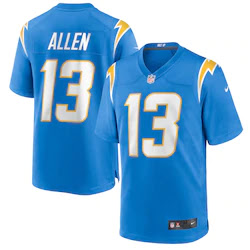
Going further afield in the search for blue and gold team colours, there’s an almost endless list, including the LA Pacers in American basketball, the LA Chargers in American Football and the West Coast Eagles in Aussie Rules.


Indiana Pacers (American Basketball)...


LA Chargers (American Football)...


West Coast Eagles (Australian Rules football)

But while many other teams around the world wear the blue and gold combination with pride, there is only one team that I know of from outside GAA circles that has the Tipperary design of a blue jersey with gold hoop and that team is the famous Argentinian football club Boca Juniors.

Boca Juniors are probably the top team in Argentinian club football, although fans of River Plate, their Buenos Aires rivals, would contest that. The record for Boca Juniors speaks for itself, with 34 Primera League titles (just behind their arch rivals River Plate) but leading the way in national and international cup competitions. Among the superstars who have played for Boca Juniors are Martin Palermo (top scorer), Roberto Mouzo (most appearances) and a few who have lit up European football, such as Carlos Tevez and Diego Maradona. 


Carlos Tevez, a player whose Premier League career was full of footballing brilliance and transfer related controversy, here wearing the blue and gold of Boca Juniors


Diego Maradona in his Boca Juniors prime


Maradona enjoying his retirement


And then I recently learned that, aside from the Tipperary jersey, Boca Juniors also have another strong Tipperary link in the person of Paddy McCarthy from Cashel. Born in 1871, McCarthy emigrated to Argentina in 1900. There he worked on the docks and excelled in boxing. In fact, he won the first professional boxing match ever held in Argentina in 1903 with a 4th round knock-out of Italian Abelardo Robassio. McCarthy then went on to teach English and Physical Education. He is reported to have met a number of visiting dignitaries to the country, including Theodore Roosevelt (from whom he received a gift of the Yale sweater seen in the photograph below), the Duke of Kent and the Prince of Wales.


Paddy McCarthy from Cashel: footballer, boxer, teacher, coach, referee 

and a key figure in the foundation of Boca Juniors


However, Paddy McCarthy’s greatest sporting legacy was in helping inspire a group of young Italian and Greek immigrants to found the Boca Juniors football club. He then went on to coach the team for several years and he also had a successful career as a referee. In fact, despite his Boca Juniors connections, McCarthy refereed in 1913 the first meeting of Boca Juniors with their city rivals River Plate in a now supercharged contest that has come to be known as the ‘Superclassico’.

https://www.irishtimes.com/sport/soccer/soccer-angles-the-mysterious-irishman-who-helped-build-boca-juniors-1.3048949

McCarthy lived to the grand old age of 92 and left an indelible mark on Argentinian sport and society. However, his story has become forgotten with the passage of time. It appears that McCarthy was one of many Irish and British immigrants who introduced their native sports to Argentina at the end of the 19th and beginning of the 20th centuries. For example, the Lobos Athletic Club was founded by Irish immigrants in 1892 and hurling was also introduced by the Irish http://gaathenandnow.com/hurling-in-argentina-118-years-ago/.

Finally, it would be nice to think that Tipperary man Paddy McCarthy inspired Boca Juniors to adopt the blue and gold hooped jerseys of his native county. The truth is not so romantic. The generally accepted story (also perhaps apocryphal) is that Boca Juniors were looking for new team colours around the turn of the 20th century. This was some years before Tipperary GAA teams adopted the blue and gold of Tubberadora as the county jersey https://sportyman2020.blogspot.com/2020/08/lena-rice-and-tubberadora.html. Someone suggested that Boca Juniors adopt as their colours those on the flag of the next ship to come in to Buenos Aires. And when the ship came in, it was carrying a blue and gold flag, not of Tipperary, but of Sweden.


A gold Nordic cross on a field of blue: the flag of Sweden


The Rock of Cashel, bastion of Irish kings for centuries and the home town of Paddy McCarthy, who would inspire the foundation of Boca Juniors, a bastion of Argentinian football. 


Friday, September 11, 2020

Liverpool FC in the 1930s - The Great (Footballing) Depression


Mirroring international economic fortunes, Liverpool went from the successes of the Roaring Twenties (https://sportyman2020.blogspot.com/2020/09/two-titles-two-irishmen-and-two-macs.html) to the harsh realities of The Great Depression in the next decade. 

And so the 1930s for Liverpool FC was a decade to forget, but I have trawled through the history books and managed to find at least a few things that should be remembered. 

Moving up and down the lower reaches of the First Division table, Liverpool managed their highest finish of the decade (7th) in 1934-1935 but flirted with relegation in three of the seasons (1933-1934, 1935-1936 and 1936-1937). There was no joy in the FA Cup either, with their run as far as the 1931-1932 quarter final being as good as it got.  


Migrant Mother: photograph by Dorothea Lange (1936). The subject is Florence Owens Thompson and two of her children and the image has become synonymous with the struggles of Americans during the Great Depression. Such is the sombre tone set by the image that Ms. Thompson may also have been a Liverpool supporter during this time, the second least successful decade in the history of the club.


The political and military sabre rattling in Europe built steadily during the 1930s until the outbreak of World War II and the cessation after only three games of the 1939-1940 season. In football terms, the outbreak of war brought a welcome halt to the gallop of Liverpool’s great city rivals Everton, who had won the First Division title in 1931-1932, the FA Cup in 1932-1933 and then leapfrogged Liverpool on the roll of honour to take their 5th league title in 1938-1939.


The outbreak of World War II puts an end to regular football in England at the beginning of the 1930-1940 season.


The team of the decade was undoubtedly Arsenal, who won their first five titles in the 1930s, while Sunderland picked up their 6th (and to date their last) title in 1935-1936, thus joining Aston Villa at the summit of that league title roll of honour.


Delirious 1930s Arsenal fans celebrating their most glorious decade, in a time before tedious health and safety rules existed to restrict train based celebrations


From their lofty 1930s heights, one has to feel for Sunderland, who are now stuck in the quicksand of third tier football and, worst of all, have become serial victims of a Netflix football based misery-documentary known as ‘Sunderland ‘Til I Die’, featuring relegation, financial mismanagement, blubbering and heartbroken fans and a mawkish opening song about the demise of the shipyards.


A typically exploitative image from 'Sunderland 'til I Die', 

depicting misery levels akin to Dorothea Lange's Migrant Mother


And as we’re on the topic of the success of other clubs during Liverpool’s somewhat grim 1930s decade, it’s worth noting that Preston North End won the 1938 FA Cup. On their team was a hardy Scottish half back who was described as being ‘full of good football and unlimited energy; he should go far’. That FA Cup medal was to be his only major honour as a player but he would indeed go far, bringing untold riches in silverware to Liverpool some years later, when he would become their most iconic manager. His name, of course, was Bill Shankly.


Bill Shankly in his playing days with Preston North End


Shankly (left) and Preston North End team mates with the 1938 FA Cup. It would be Shankly's only major honour as a player but he would go on to deliver masses of silverware for Liverpool as manager from 1959 to 1974, including a very belated first FA Cup win in 1965.


Incidentally, while Bill Shankly was playing for Preston North End, a fellow Scot and friend of his was playing as a defender for Liverpool. His name was Matt Busby and he would play 122 times for Liverpool between 1936 and 1939. After leaving Liverpool, Busby would go on to become manager of a nearby club, achieving with them what some have described as being more than a modest degree of success.

Despite Liverpool’s struggles during the 1930s, there were some standout figures. George Kay took over as manager from George Patterson in 1936-1937 and, in a hint at glory days still some way ahead, he signed Billy Liddell, Willie Fagan and Bob Paisley.

However, the real standout player for Liverpool during the 1930s was a South African forward called Gordon Hodgson. The current Liverpool squad boasts African superstars such as Mo Salah, Sadio Mane and Naby Keita. But Liverpool’s recruitment links with the continent go all the way back to the late 1920s when they set up a club agent in South Africa. Some of the key South Africans to subsequently play for Liverpool included Berry Nieuwenhuys, Herman van den Berg, Lance Carr, Dirk Kemp, Bob Priday and Hugh Gerhardi, and Hodgson was the most successful of them all.

His stats alone are astounding. He scored 241 goals in 377 games between 1926 and 1935 and his 233 top flight league goals remains a club record, putting him ahead of players such as Ian Rush, Billy Liddell and Robbie Fowler. He also holds the Liverpool all-time goals per game ratio of 0.639, ahead of Luis Suarez, Mo Salah and John Aldridge. His 36 goals in 1930-1931 would stand as a season record until overtaken by Roger Hunt in 1964-1965. Finally, his record of 17 hat-tricks remains a club record, again ahead of such legends as Ian Rush and Roger Hunt.

And if Hodgson’s football achievements alone were not enough, he also managed to play baseball for Everton and cricket for Lancashire. 


Gordon Hodgson (1904-1951) who led the Liverpool line from 1925 to 1936


Summary of the 1930s:

(Top scorer is based on goals scored in league and FA Cup)


1930-1931

First Division: 9th (winners: Arsenal, their first win)

FA Cup: 3rd round (winners: West Bromwich Albion, their 3rd win)

Manager: George Patterson

Captain: Tom Morrison

Top scorer: Gordon Hodgson (36)


1931-1932

First Division: 10th (winners: Everton, their 4th win)

FA Cup: Quarter final (winners: Newcastle United, their 3rd win)

Manager: George Patterson

Captain: Tom Bradshaw

Top scorer: Gordon Hodgson (27)


1932-1933

First Division: 14th (winners: Arsenal, their 2nd win)

FA Cup: 3rd round (winners: Everton, their 2nd win)

Manager: George Patterson

Captain: Tom Bradshaw

Top scorer: Gordon Hodgson (24)


1933-1934

First Division: 18th (winners: Arsenal, their 3rd win)

FA Cup: 5th round (winners: Manchester City, their 2nd win)

Manager: George Patterson

Captain: Tom Bradshaw

Top scorer: Gordon Hodgson (25)


1934-1935

First Division: 7th (winners: Arsenal, their 4th win)

FA Cup: 4th round (winners: Sheffield Wednesday, their 3rd win)

Manager: George Patterson

Captain: Ernie Blenkinsop/Tom Cooper

Top scorer: Gordon Hodgson (29)


1935-1936

First Division: 19th (winners: Sunderland, their 6th win, joining Aston Villa at the top of the roll of honour)

FA Cup: 4th round (winners: Arsenal, their 2nd win)

Manager: George Patterson

Captain: Ernie Blenkinsop

Top scorer: Fred Howe (17)


1936-1937

First Division: 18th (winners: Manchester City, their 1st win)

FA Cup: 3rd round (winners: Sunderland, their 1st win)

Manager: George Kay

Captain: Ernie Blenkinsop/Tom Cooper

Top scorer: Fred Howe (16)


1937-1938

First Division: 11th (winners: Arsenal, their 5th win)

FA Cup: 5th round (winners: Preston North End, their 2nd win)

Manager: George Kay

Captain: Tom Cooper

Top scorer: Alf Hanson (15)


1938-1939

First Division: 11th (winners: Everton, their 5th win)

FA Cup: 5th round (winners: Portsmouth, their 1st win)

Manager: George Kay

Captain: Tom Cooper

Top scorer: Berry Nieuwenhuys (16)


1939-1940

First Division: stopped after three games due to outbreak of World War II

FA Cup: not contested, due to outbreak of World War II


Friday, September 4, 2020

Two titles, two Irishmen and two Macs: Liverpool FC in the 1920s


In one of the feedback comments to my last blog on the history of Liverpool FC, see link: https://sportyman2020.blogspot.com/2020/08/liverpool-fc-third-decade-1910-1920.html, a friend of mine suggested that I may be developing LFCOCD, i.e. a rare form of obsessive compulsive disorder related to history and facts about the world’s greatest football club. As this friend is a renowned and learned psychiatrist and historian (Dr. Aidan Collins, also known in Twitterland as @navaniarmhi), I’ve decided to take his advice on board and try and avoid obsessive levels of overinclusiveness for this week’s blog, on Liverpool’s 4th decade, the 1920s.


So for the 1920s I have tried to condense Liverpool’s decade under a few key headings: their two First Division title wins during that time, their two most influential Irishmen of the decade and two very important Macs. Carrying on with the Irish theme, I have also paid tribute to a longstanding Liverpool trainer who, while not born in Ireland, had a very Irish name and probable Irish roots.


Two titles

The 1920s would prove to be Liverpool’s most successful to date, with two First Division titles and First Division status maintained for the entire decade. In fact, Liverpool would not have a better decade until the 1960s, when under the stewardship of a certain Mr. Shankly. However, FA Cup success continued to elude Liverpool.


Liverpool FC, First Division champions for the 3rd time, 1921-1922 

Back row: William Connell (Trainer), Harry Chambers, Jock McNab, Elisha Scott, Walter Wadsworth, Tom Bromilow, Dick Forshaw

Front row: David Ashworth (Manager), Bill Lacey, Ephraim Longworth, Donald McKinlay, Tommy Lucas, Fred Hopkin, George Patterson (Secretary)

On ground: Danny Shone, Harry Lewis


Liverpool FC, First Division champions for the 4th time, 1922-1923, featuring players, management and directors

The players and trainers are in the second row from the front:

Charlie Wilson (Trainer), Bill Lacey, Dick Forshaw, Jock McNab, Walter Wadsworth, Elisha Scott, Donal McKinlay, Ephraim Longworth, Tom Bromilow, Dick Johnson, Harry Chambers, Fred Hopkin, William Connell (Trainer) 


Two Irishmen and two Irelands

Belfast born Elisha Scott (1893-1959) was one of Liverpool’s first great heroes, playing as goalkeeper with the club before World War I from 1912-1915 and again after the war from 1919 right the whole way through to 1934, making him Liverpool’s longest serving player of all time, a record that still stands.

Scott’s absolute heyday came during the two championship winning seasons in 1921-1922 and 1922-1923, when he conceded just 67 goals in 84 games. Although relatively small for a goalkeeper at 5 feet 9.5 inches, he was described by one reporter as having ‘the eye of an eagle, the swift movement of a panther when flinging himself at a shot and the clutch of a vice when gripping the ball’.

It’s also said that he was the first Liverpool player to have his own personalised chant, the Anfield crowd urging him on with deafening calls of ‘Lisha, Lisha, Lisha’. Scott’s almost mystical comment - ‘I speak to these people’ - showed that his bond with the Liverpool fans was clearly mutual, deep and Shankly-esque in intensity.

Scott delivered an emotional farewell speech at Anfield prior to his last home game in 1934 when he said: ‘We have always been the best of friends and shall always remain so. I have finished with English association football. Last, but not least, my friends of the Kop. I cannot thank them sufficiently. They have inspired me. God bless you all’. In ‘The Anatomy of Liverpool: A History in Ten Matches’, Jonathan Wilson and Scott Murray rightly describe Elisha Scott as one of Liverpool’s five era defining players.


Elisha Scott (1893-1959), still Liverpool's longest serving player 


Scott saves a penalty against Arsenal in the FA Cup, 1923


From the other end of the island of Ireland came Bill Lacey, (1889-1969) who was born in Enniscorthy, Co. Wexford. Following stints with Shelbourne and then Everton, Lacey played with Liverpool from 1912 to 1924, with two ‘guest’ spells at Belfast United and Linfield during World War I.

Lacey seems to have played in all positions at some stage or other and scored 18 goals during his 230 games with Liverpool. As highlighted in an earlier blog https://sportyman2020.blogspot.com/2020/08/liverpool-fc-third-decade-1910-1920.html, Lacey was the only international player on the Liverpool team that lost the 1914 FA Cup Final to Burnley. However, he was to have international success that year, when he helped Ireland to their first British Home Championship on a team that included Patrick O’Connell, who would go on to captain Manchester United and later manage Barcelona https://www.the42.ie/patrick-oconnell-barcelona-3565751-Aug2017/   

The wonderful and intrepid Sportyman southeast correspondent Dr. Denise Rogers (@Denis1Rogers on Twitter) is a proud native of Enniscorthy and she has sent me on some further information on the great Bill Lacey:

https://www.pressreader.com/ireland/enniscorthy-guardian/20170725/281560880859025

In the link above you can read the heart-warming story of how a civic reception was held in Enniscorthy in 2017 for Bill, attended by his grandson, also Bill Lacey, his wife and their sons James and Lewis Lacey. The town has also honoured Bill Lacey with a plaque on the Ross Road, where he grew up.

Dr. Rogers has also kindly forwarded the link below, to a Gorey Guardian article in 2010 announcing the unveiling of Bill Lacey’s plaque and providing further information on his career and life:

https://www.independent.ie/regionals/goreyguardian/news/liverpool-legend-bill-leacy-to-be-honoured-27336624.html


Bill Lacey (1899-1969)


Liverpool First Division champions from across the footballing ages pictured in 1964: 

Bobby Graham and Gordon Wallace (champions in 1963-1964), Joe Hewitt (1905-1906) 

and Bill Lacey (1921-1922 and 1922-1923)


While Elisha Scott and Bill Lacey were at one stage united as team-mates for both Liverpool and Ireland, the partition of Ireland in 1921 leading to the partition of Irish football in 1924 would later separate them. Scott stayed on playing with the Belfast based Irish Football Association (IFA), earning a total of 31 caps. However, after his pre-partition 23 caps with the IFA, Lacey switched to the Dublin based Football Association of Ireland of the new Irish Free State, winning an additional 3 caps between 1927 and 1930.

The growing and increasingly bitter sectarian and political divisions in Ireland hit home for Elisha Scott during his later managerial career when, on December 26th 1948, his highly successful Belfast Celtic side were attacked at the end of a game by opposition Linfield fans. Because of, among other things, a lack of police protection on the day for the Belfast Celtic players, the club withdrew from competition at the end of the season and subsequently ceased to exist. A terrible irony here is that Scott himself was blind to religious background, famously saying that ‘I don’t play Protestant players and I don’t play Catholic players. I play good players’.

Scott’s playing and managerial achievements with Ireland, Liverpool and Belfast Celtic along with his non-partisan religious views all combine to make him a truly heroic figure and one whose memory should be cherished and acknowledged more overtly in his home city.

For background information and insights on Elisha Scott, special thanks are due to my lifelong friend and Belfast native, Dr. Dermot Shearer (@dalekboy on Twitter).


Two Macs

In the summary of the 1920s at the end of this blog, you will see that Liverpool was managed and captained by two important Macs for most of the decade. In a blast from the early days and ‘The Team of the Macs’ (see earlier blog: https://sportyman2020.blogspot.com/2020/05/aston-villa-5-liverpool-0-1899-and-2019.html), Matt McQueen (1863-1944) returned to become the first former player to manage Liverpool. Initially lured south from Scotland as a player in 1892 by John McKenna and William Barclay, he had joined an almost exclusively Scottish group of players to form Liverpool’s first teams and in fact he was joined as a teammate by his brother Hugh in Liverpool’s first ever Football League match in 1893. McQueen seems to have played all over the field, including in goal, and won two Second Division titles with Liverpool, in 1893-1894 and 1895-1896.

McQueen came back as manager in early 1923 to take over from David Ashworth who left in the middle of that second consecutive title winning season to return to his alma mater club of Oldham Athletic. Despite starting on the high of a league championship victory within a few months, McQueen would not have any further trophy success but managed to keep Liverpool safely in the top half of the First Division for most of the rest of the decade.


Liverpool's 'Team of the Macs', 1892 (future manager Matt McQueen is 4th from right in the back row)


Matt McQueen (1863-1944) who played with Liverpool from 1892-1899 and later managed the club from 1923-1928


The second Mac, Donald McKinlay (1891-1959), was another remarkable servant for Liverpool during this era, playing times 434 times between 1910 and 1929 and captaining the club from 1921 to 1928. He was therefore captain for the two successive championship winning seasons, and he earned a reputation as a hardy defender who could play in both the full and half back lines. Noted as having a powerful shot and described as being ‘as nippy and quick as a jack-in-the-box’, he scored 35 goals for the club. In 1955 he was quoted as saying, in wistful reflection on his time with Liverpool: ‘If I had 20 years to go again, I would go back to them’.


Donald McKinlay (1891-1959), who played with Liverpool from 1910 to 1929, 
captaining the team for seven consecutive seasons


And finally – Irish blood, English heart

The huge influx of Irish people from the time of the Great Famine onwards meant that late 19th Century Liverpool was a very Irish city. At one stage, approximately one quarter of the city's inhabitants had been born in Ireland. Liverpool remains a fiercely independent city, full of Irish history, surnames and a tendency towards Scouseness as opposed to Englishness.


Liverpool's Scouse spirit evident on the Anfield Kop


One prominent Irish surname in the early days of Liverpool FC was that of William Connell. An unsung hero of the club, he can be seen as a constant presence in team photographs for the first three decades of the 20th century, during which time as ‘chief trainer’ he led Liverpool to its first four First Division titles. In fact, such was the length of his time with Liverpool that he was described by one club director as ‘growing white in the service of the club’. His importance to the club was highlighted with the benefit match played for him at Easter in 1924, against Rangers, and he retired ‘with full benefits’ in 1929. Connell was succeeded as trainer by Charlie Wilson, with former Liverpool player and England international Ephraim Longworth taking over as coach. Connell's funeral in 1940 was attended by the leading players and management of both Liverpool and Everton.


Liverpool FC in 1903-1904 - Trainer William Connell is on the far right of the middle row


Meanwhile, over two decades later and the Liverpool FC photo for 1926-1927 - the long serving William Connell is in the second row from the front, second from left


An early example of the commercialization of football - William Connell's endorsement of Bovril


Liverpool in the 1920: summary of the decade

Note: for top scorer the goals scored is for all competitions combined, i.e. league and FA Cup

1920-1921

League: 4th in First Division (Winners: Burnley, their 1st win)

FA Cup: 2nd round (Winners: Tottenham Hostpur, their 2nd win)

Manager: David Ashworth

Captain: Ephraim Longworth

Top scorer: Harry Chambers (24)


1921-1922

League: Champions (3rd win)

FA Cup: 2nd round (Winners: Huddersfield Town, their 1st win)

Manager: David Ashworth

Captain: Donald McKinlay

Top scorer: Harry Chambers (21)


1922-1923

League: Champions (4th win)

FA Cup: 3rd round (Winners: Bolton Wanderers, their 1st win)

Manager: David Ashworth/Matt McQueen

Captain: Donald McKinlay

Top scorer: Harry Chambers (25)


1923-1924

League: 12th (Winners: Huddersfield Town, their 1st win)

FA Cup: 4th round (Winners: Newcastle United, their 2nd win)

Manager: Matt McQueen

Captain: Donald McKinlay

Top scorer: Jimmy Walsh (19)


1924-1925

League: 4th (Winners: Huddersfield Town, their 2nd win)

FA Cup: 4th round (Winners: Sheffield United, their 4th win)

Manager: Matt McQueen

Captain: Donald McKinlay

Top scorer: Dick Forshaw (19)


1925-1926

League: 7th (Winners: Huddersfield Town, their 3rd win)

FA Cup: 4th round (Winners: Bolton Wanderers, their 2nd win)

Manager: Matt McQueen

Captain: Donald McKinlay

Top scorer: Dick Forshaw (29)


1926-1927

League: 9th (Winners: Newcastle United, their 4th win)

FA Cup: 5th round (Winners: Cardiff City, their first and to date only win)

Manager: Matt McQueen

Captain: Donald McKinlay

Top scorer: Harry Chambers (21)


1927-1928

League: 16th (Winners: Everton, their 3rd win)

FA Cup: 4th round (Winners: Blackburn Rovers, their 6th win, a record)

Manager: Matt McQueen

Captain: Donald McKinlay

Top scorer: Gordon Hodgson (23)


1928-1929

League: 5th (Winners: Sheffield Wednesday, their 3rd win)

FA Cup: 4th round (Winners: Bolton Wanderers, their 3rd win)

Manager: Matt McQueen/George Patterson

Captain: Tom Bromilow

Top scorer: Gordon Hodgson (32)


1929-1930

League: 12th (Winners: Sheffield Wednesday, their 4th win)

FA Cup: 3rd round (Winners: Arsenal, their 1st win)

Manager: George Patterson

Captain: James Jackson

Top scorer: Jimmy Smith (23)